How Businesses Can Turn Attention Into Real Growth

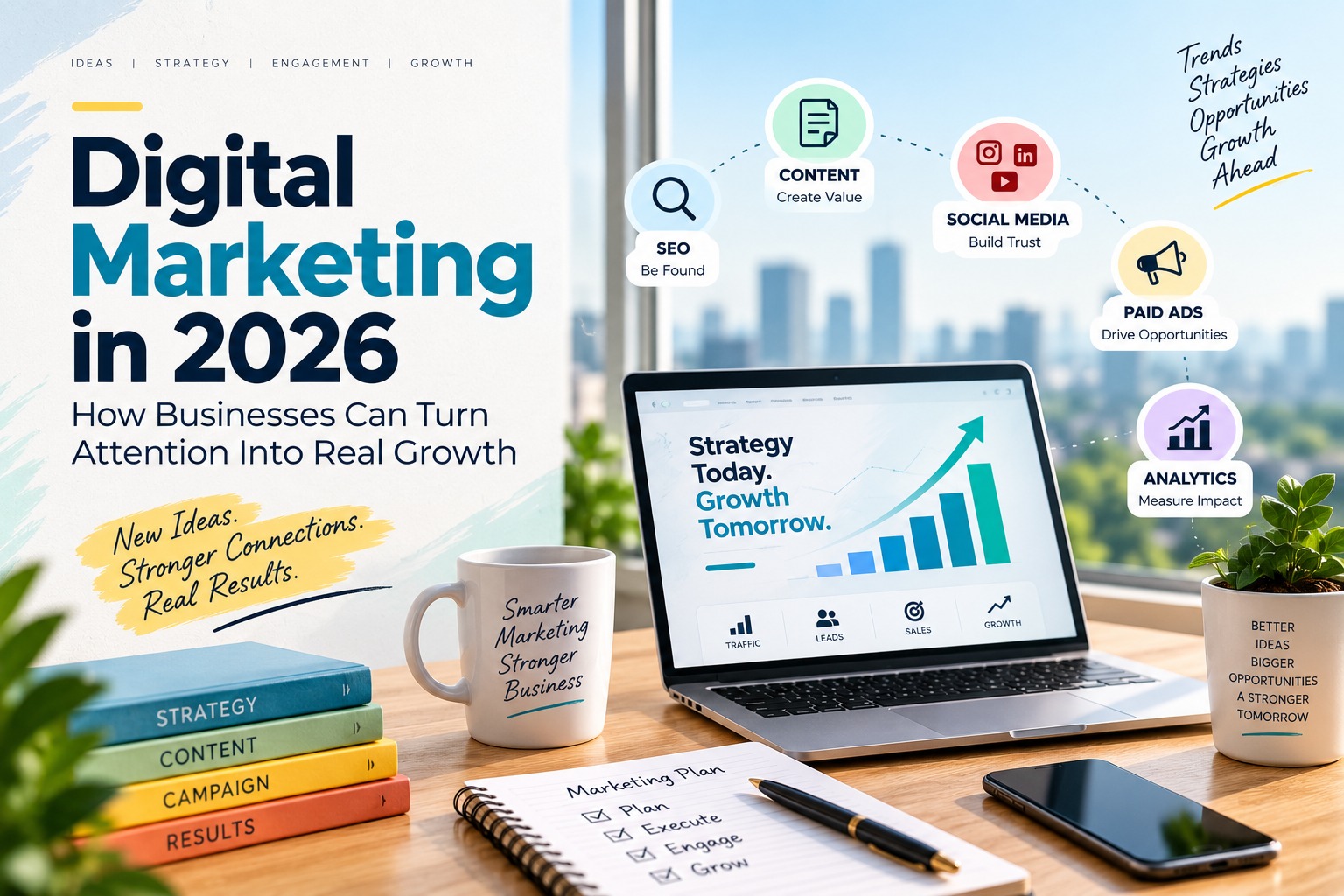
Digital marketing has changed from simply being visible online to being useful at the right moment. The reason is simple: digital marketing is no longer about doing more. It is about connecting the right audience, message, channel, and customer experience.
A clear strategy makes every channel work toward the same outcome instead of becoming isolated marketing activity online.
Why Traditional Approaches Are Losing Momentum
Many businesses still measure marketing success through impressions, clicks, follower counts, and website traffic. These numbers can be useful, but they do not automatically translate into revenue.
A campaign that generates thousands of impressions but no qualified leads is not necessarily successful. Similarly, a website can receive visitors without creating business opportunities.
The focus should move from activity to outcomes.
Search Is Becoming More Conversational
Search behavior is evolving as people increasingly use AI-powered tools alongside traditional search engines. Google has expanded AI-powered search experiences, while tools such as ChatGPT are changing how people research products, services, and ideas. Google's current guidance continues to emphasize technical foundations, useful content, and accessible pages.
This means businesses should not abandon SEO. They should make it more useful.
Content should answer real questions clearly, demonstrate expertise, use logical structure, and provide information worth referencing. Keyword research remains valuable, but search intent should determine what the content actually says.
AI Can Accelerate Marketing, But It Cannot Replace Strategy
Artificial intelligence can help marketers research topics, analyze data, create content variations, and automate repetitive tasks. However, producing more content does not automatically create more visibility or trust.
The opportunity is to combine AI efficiency with human knowledge.
Marketing teams can use AI for speed while relying on people for customer understanding, brand voice, fact-checking, creative direction, and strategic decisions. As AI-generated content becomes easier to produce, first-hand experience and original insights become important ways to differentiate a brand.
Content Needs a Point of View
Businesses do not need another generic article explaining the basics of SEO or social media. They need content that gives readers a reason to remember the brand.
That could be a practical framework, original observation, case study, customer lesson, comparison, or expert opinion.
For example, instead of publishing “What Is Digital Marketing?”, a company could publish “Why Our Lead Generation Campaigns Failed—and What We Changed.” The second approach creates curiosity and demonstrates experience.
Social Media Should Build Trust
Social media is increasingly part of the customer research journey. Potential customers may check a company's LinkedIn page, Instagram profile, videos, reviews, or recent posts before making contact.
The objective is not to make every post sell. It is to make the brand worth following.
Local Relevance Can Create an Advantage
For Indian businesses, digital marketing can become more effective when content reflects local audiences. Regional languages, local search behavior, location-specific pages, and culturally relevant communication can help businesses connect with audiences beyond a generic national message.
A company targeting Tamil Nadu, for example, should understand the local market rather than simply copying a national campaign.
Measure the Complete Customer Journey
A modern digital marketing strategy should connect marketing activity with business outcomes.
A useful journey looks like:
Awareness → Engagement → Website Visit → Lead → Sales Conversation → Customer
If traffic is high but enquiries are low, the website or offer may need improvement. If enquiries are high but sales are weak, lead quality or follow-up may be the problem.
Build a Connected Marketing System
The strongest strategy is rarely one channel.
A business can use SEO to capture existing demand, content to educate prospects, social media to build trust, paid campaigns to accelerate reach, and CRM systems to nurture leads.
One useful piece of content can also become a LinkedIn post, short video, infographic, newsletter, or customer resource.
The goal is not to create more content. It is to create more value from good content.
What Businesses Should Do Next
Businesses looking to strengthen digital marketing can start with five actions:
- Define one clear business goal.
- Identify the audience and their biggest problems.
- Audit the website and existing content.
- Choose two or three channels instead of trying everything.
- Measure qualified leads and conversions, not only reach.
Final Thoughts
Digital marketing in 2026 is becoming more connected, competitive, and dependent on trust.
AI is changing content production. Search is changing how people discover information. Social platforms influence purchasing decisions.
But the foundation remains simple: understand your audience, solve real problems, communicate clearly, and make it easy for people to take action.
The businesses that succeed will not necessarily be the ones publishing the most content or using the most tools. They will be the ones that consistently create useful experiences and connect marketing activity to measurable business growth.
About Nexova TechZone
Nexova TechZone is an IT services and consulting company providing digital marketing, software development, IT staffing, AI and automation, cybersecurity, IT infrastructure, and BPO solutions.